Why I'm doing this
The other day I was chatting with a friend about this website and the book I'm writing. She asked me a simple question:
"Why are you so determined to get this website out into the world?"
It stopped me in my tracks.
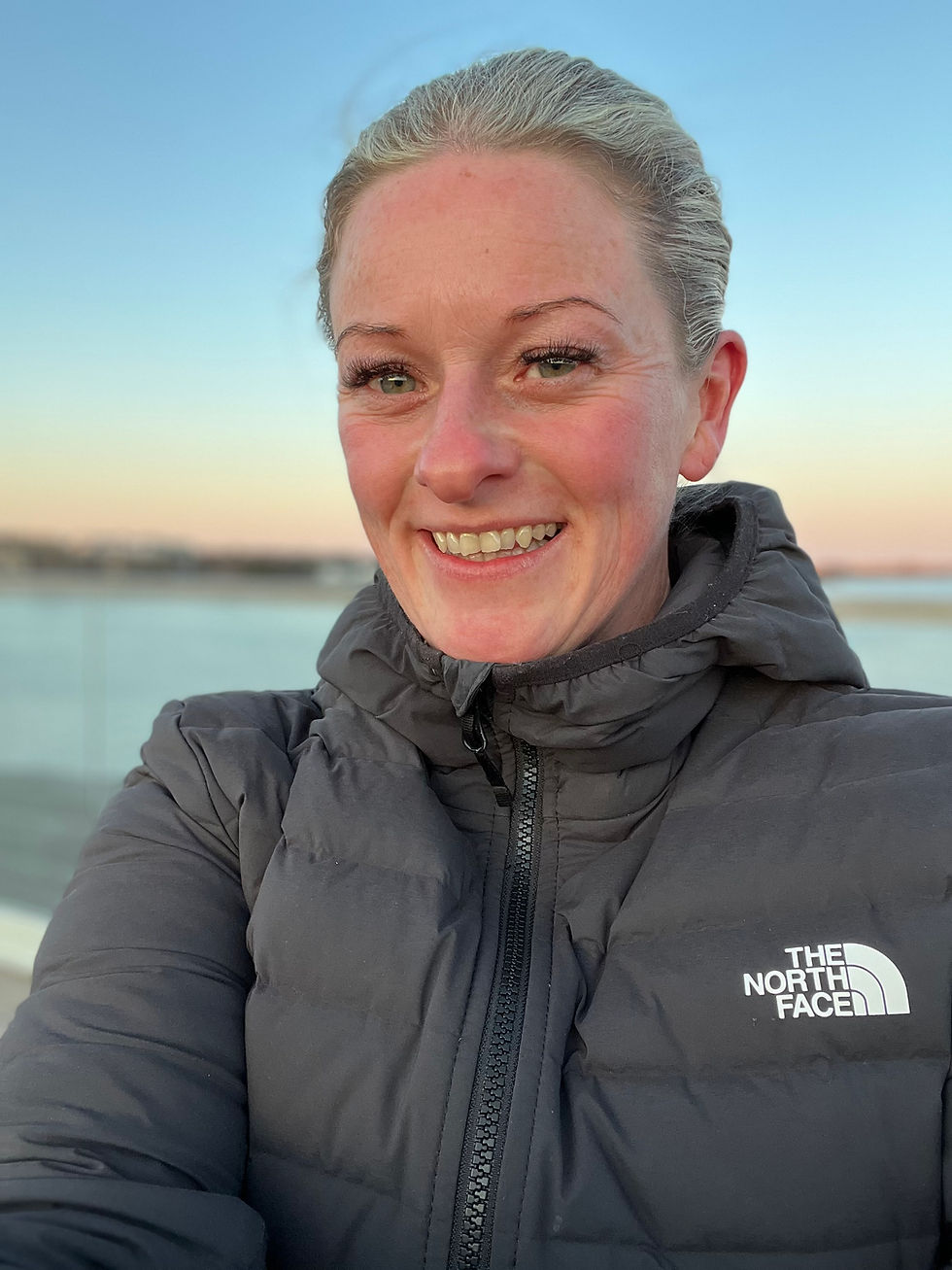
I realised I hadn't really thought about the answer because, to me, it felt so obvious. But when I took a step back, I understood exactly why I'm doing this.
I'm creating Not Broken because I want to reach the women who need to hear that they are not alone.
For years, I carried shame that wasn't mine to carry. I masked my emotions with alcohol and convinced myself I simply wasn't coping with life as well as everyone else. Every month I became someone I didn't recognise. I thought I was the only woman who couldn't handle PMS. I thought I was the only mum who felt overwhelmed by her children and needed a bottle of wine just to get through the evening.
Then I discovered PMDD.
Suddenly everything made sense.
But with that understanding came another realisation: there are countless women still living exactly as I was—believing they're broken when they're not.
That's why I'm here.
I don't particularly enjoy talking about the darkest periods of my life. I've made peace with them now. I can look back with compassion rather than feeling trapped inside those memories. I have hope for the future, but there was a time when I genuinely believed nothing would ever change.
The hardest part wasn't what people could see. It was what they couldn't.
From the outside I had a loving husband, wonderful children, supportive friends and a good life. Inside, I felt desperately alone.
If sharing my story helps even one woman realise she's not failing, she's not weak and she's certainly not broken, then every uncomfortable conversation will have been worthwhile.
The more I thought about my friend's question, the more I realised this isn't the first time I've found myself standing up for people who felt they didn't have a voice.
I've been doing it for most of my life.
When I was at secondary school, something never sat right with me. Every day on the school bus the boys claimed the upstairs deck while the girls were expected to sit downstairs.
It wasn't an official rule—it was just "the way things were."
The problem was there were far more girls than boys on my bus, meaning there weren't enough seats downstairs. Instead of questioning the arrangement, everyone simply accepted it.
One day a friend and I decided we'd had enough. We walked upstairs and tried to explain the situation.
The boys weren't interested.
I had chewing gum thrown into my hair and was told to "f**k off downstairs with the rest of the girls."
We retreated, but I was furious.
The following day we went to our Year Head, who dismissed it at first and suggested we simply sit upstairs. So that's exactly what we did.
Again, we were sworn at. Younger boys threw juice over us, but this time we refused to move.
Eventually the issue reached the Headteacher. After discussions with the school, it was agreed that the buses should no longer be informally divided into "boys upstairs, girls downstairs." It was discussed in assembly and from that point onwards everyone could sit wherever they liked.
This was 1999.
It might seem like a small thing now, but to me it wasn't about where I sat. It was about challenging something that everyone else accepted simply because "that's how it's always been."
Years later, while living in Malta, I found myself doing something similar.
My eldest daughter, Lucy, was involved in two separate school bus accidents.
The first was relatively minor, and I only discovered it when she arrived home.
The second was far more serious.
She was only five years old.
The bus she travelled on didn't have seatbelts. None of the buses did. When the crash happened she hit her head on the seat in front.
As frightening as the accident was, what shocked me even more was what happened afterwards.
The schools considered the children to be the responsibility of the bus company once they left the school gates. The drivers had no emergency contact details, no records of which children they were carrying and, at the time, there was little oversight of who was driving the buses.
By complete chance, Lucy's babysitter happened to drive past the accident scene and recognised her standing beside an ambulance in tears.
If she hadn't driven past, nobody would have been able to contact me.
Lucy didn't know my phone number.
The school had already closed.
She could have been taken to hospital frightened and alone while I had no idea where she was.
Thankfully she was absolutely fine, but I couldn't ignore what had happened.
I met with the school's Headteacher, but my concerns weren't met with the urgency I expected.
So I took matters into my own hands.
I started a petition calling for safer school transport. I created a Facebook group for concerned parents. I spoke to newspapers, appeared on Maltese television and met with both the Minister for Education and the Minister for Transport.
Not because I enjoyed campaigning.
Because children deserved better.
I left Malta six months later, so I don't know every change that followed. But I do remember seeing roadside billboards encouraging children to wear seatbelts.
Maybe my campaigning played a part. Maybe it didn't.
Either way, I knew I'd done everything I could.
Even at work, I found myself asking difficult questions.
I worked in customer service for an online betting company. Most of us dealing with customers were women. Every day we handled complaints, solved problems and kept customers happy.
In another department, the sportsbook team—made up entirely of men—received quarterly bonuses.
Customer service received nothing.
When I asked why, everyone shrugged.
"That's just how it is."
Those words have never sat comfortably with me.
I raised the issue with senior management, explaining that if customer service wasn't there to support the business, the company wouldn't function as effectively. Our work mattered too.
A few weeks later, bonuses were introduced for the customer service department.
Ironically, I left the company before I ever received one.
But future employees did.
Looking back, I can see a pattern that I couldn't recognise at the time.
Whether it was standing up to school bullies, campaigning for children's safety, challenging unfair treatment in the workplace or now speaking openly about PMDD and women's mental health, the motivation has always been the same.
I've never been particularly good at accepting, "That's just the way things are."
If something feels unfair, unsafe or simply wrong, I've always found it difficult to stay quiet.
This website isn't really about me.
It's about every woman who has ever been told she's overreacting.
Every woman who has been dismissed.
Every woman who has wondered why life feels so much harder for her than everyone else.
Every woman who has quietly whispered to herself, "Maybe I'm just broken."
You're not.
And if I can spend the next chapter of my life helping women believe that, then every difficult experience I've lived through will have been worth it.


Comments